Technology & Product
How Thermiqa® Foam Is Created
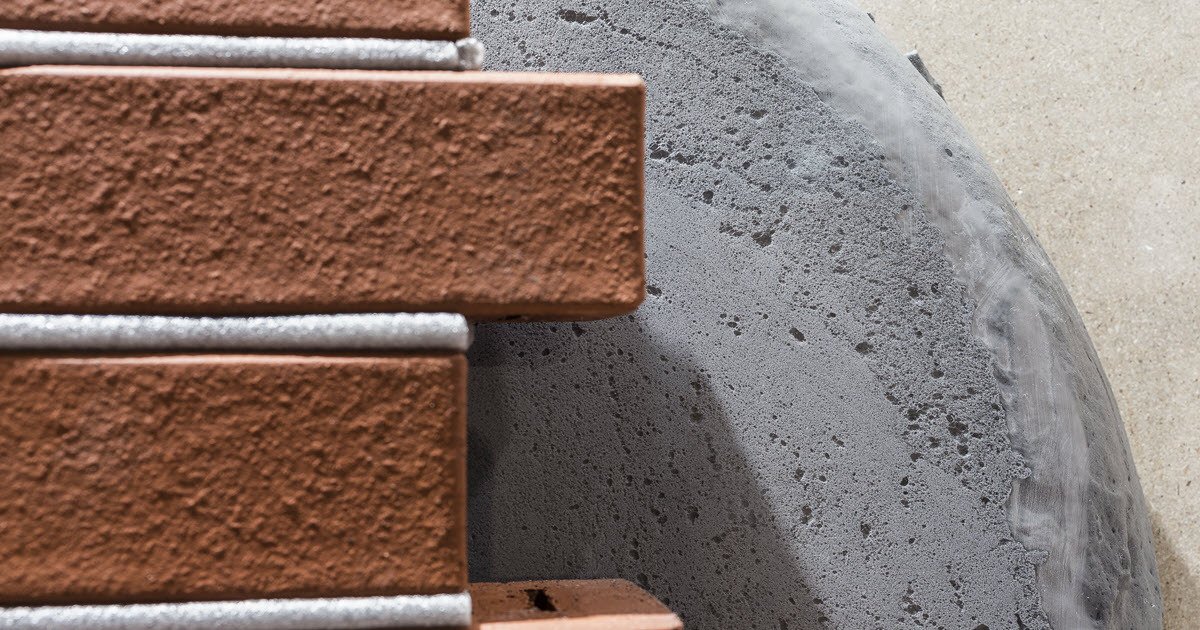
Thermiqa® is a mineral foam formulated with advanced BASF technology. It is produced in situ (directly on-site) by mixing three aqueous components with compressed air.
THE THREE ELEMENTS
Template (model)
The Template is the liquid solution that acts as the “skeleton” of the system.
- Provides the initial structure of the foam.
- Controls cell formation, allowing for uniform expansion.
- It is completely free of organic solvents and harmful blowing agents.
👉 In practice, it’s what makes it possible to achieve a uniform and stable foam, without collapses or voids inside the cavity.
Filler
The Filler is made of extremely fine inorganic mineral particles that give the foam its body and insulating properties.
- Increases density, thereby enhancing the ability to reduce thermal transmittance.
- Provides fire resistance, giving the foam a European classification of A2-s1,d0 (non-combustible).
- Adds dimensional stability, preventing deformation or shrinkage over time.
👉 This is what makes Thermiqa® a safer and more durable insulator compared to today’s most common synthetic materials.
X-linker (cross-linker)
The Cross-linker (curing agent) is the component that makes the foam a solid and compact material once hardened.
- It reacts with the Template and Filler, creating stable bonds.
- Enables self-sealing: the foam hardens precisely and automatically closes any cracks or small gaps in the wall, preventing leaks.
- Stabilizes the foam even in complex cavity geometries.
👉 This means that installation is simpler, safer, and faster — the installer doesn’t have to worry about microcracks, as the material seals them automatically.
The Template is the liquid solution that acts as the “skeleton” of the system.
- Provides the initial structure of the foam.
- Controls cell formation, allowing for uniform expansion.
- It is completely free of organic solvents and harmful blowing agents.
👉 In practice, it’s what makes it possible to achieve a uniform and stable foam, without collapses or voids inside the cavity.
The Filler is made of extremely fine inorganic mineral particles that give the foam its body and insulating properties.
- Increases density, thereby enhancing the ability to reduce thermal transmittance.
- Provides fire resistance, giving the foam a European classification of A2-s1,d0 (non-combustible).
- Adds dimensional stability, preventing deformation or shrinkage over time.
👉 This is what makes Thermiqa® a safer and more durable insulator compared to today’s most common synthetic materials.
The Cross-linker (curing agent) is the component that makes the foam a solid and compact material once hardened.
- It reacts with the Template and Filler, creating stable bonds.
- Enables self-sealing: the foam hardens precisely and automatically closes any cracks or small gaps in the wall, preventing leaks.
- Stabilizes the foam even in complex cavity geometries.
👉 This means that installation is simpler, safer, and faster — the installer doesn’t have to worry about microcracks, as the material seals them automatically.
Composition & Main Percentages
The combination of 90% minerals + 10% organic binder with optimized density results in a material that:
- is non-combustible,
- releases no irritating fibers or solvents,
- is breathable (thanks to its open-pore structure),
- can be installed quickly, with no demolition required,
- and remains stable for over 50 years.
Inorganic mineral components
Organic binder
Dry density
Thermal conductivity
Innovation is the future
| Traditional materials (rock wool, EPS, glass wool, flakes, EPS beads, synthetic foams) | Thermiqa® | |
|---|---|---|
| Flammability | Some synthetic materials or organic fibers pose higher fire risks; mineral wool is resistant but often complex to install, while EPS is easily flammable if unprotected. | Non-combustible (class A2-s1,d0 according to EN 13501-1); contains ~90% mineral components. |
| Emissions & Solvents | Some foams contain solvents, blowing agents, or irritating fibers; they release VOCs and require precautions during installation. | Aqueous solution, free from organic solvents or propellants; low emissions; dust-free and fiber-free application. |
| Application | May require invasive work, replacements, panel installations, or demolitions; often not ideal for narrow cavities. | Ideal for cavities even as small as single digits (e.g., 4–5 cm), applied through small holes with no aesthetic demolition; quick to install with no visual disturbance after completion. |
| Durability & Maintenance | Some materials deteriorate or lose effectiveness over time; installation may leave gaps or fail to fully cover fixtures and joints. | Thermiqa® adheres to internal surfaces, does not collapse, is self-sealing, dimensionally stable, and maintains its properties over time. |
| Sustainability / Disposal | Some materials are classified as special waste, require separation, and can be difficult to dispose of or recycle. | Thermiqa® can be disposed of with construction waste or reused as foundation material; its high mineral content ensures a low environmental impact during transport and storage. |
With Thermiqa®, the future is not a distant concept but a concrete choice you can make today. Our mineral insulation technology, developed with BASF, ensures safety, energy efficiency, and environmental sustainability. It’s not just an investment to reduce consumption, but a step forward toward a healthier, quieter, and more planet-friendly way of living.
THE KEY BENEFITS OF THERMIQA®
Thermiqa® represents a new generation of insulation for double-wall cavities: safe, sustainable, and easy to apply.
Thanks to its mineral formulation and dedicated installation technology, it combines high technical performance with long-lasting living comfort. Compared to traditional materials, it eliminates issues of flammability, degradation, and invasive installation, offering a modern, certified, and reliable solution.
Significantly improves the building’s energy rating, reducing both consumption and utility costs.
Thanks to its mineral composition, it is a non-combustible material certified A2-s1,d0.
Applied through small holes, without demolition, dust, or irritating fibers.
Maintains stable temperatures, eliminates drafts, and improves sound insulation.
Works even in narrow cavities (from 4 to 5 cm), where other insulating materials cannot be used.
Does not collapse or degrade; remains stable and efficient for over 50 years.
Its open-pore structure allows water vapor to pass through, preventing condensation and mold.
Composed of 90% minerals, free from solvents and fibers, and easily disposable with construction waste.
Chemical Reaction & Behavior During Application
The entire process of transforming the mixture into foam takes place directly on-site, thanks to a dedicated professional Thermiqa® machine, specifically designed to manage the three liquid components and compressed air in a controlled manner.
1) Mixing Inside the Machine
The Template, Filler, and Cross-linker are automatically dosed and combined by the machine, with the addition of compressed air.
2) Injection into the Double Wall
The fluid foam is injected into the cavity through small holes (12–16 mm), without the need for any demolition.
3) Self-Sealing
Thanks to the reaction with the Cross-linker, the foam hardens at the right moment, closing micro-cracks and preventing leaks.
4) Drying & Stabilization
Water gradually evaporates as vapor, leaving behind a porous, stable, and breathable mineral structure.